

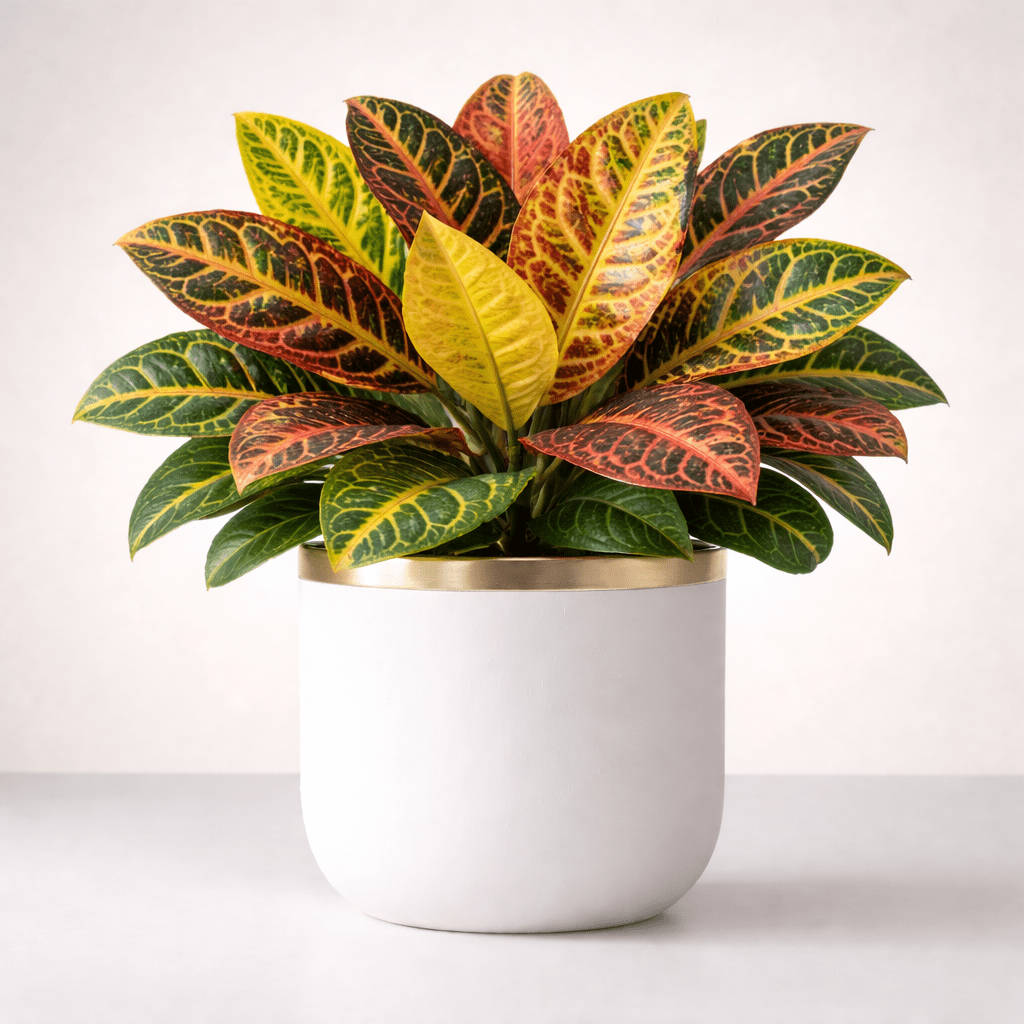
Garden Croton Plant
₹199
View & Listen Plant Education

Garden Croton Plant - Video Guide
Watch Video
All Details
A bold and flamboyant tropical shrub celebrated for its spectacularly colorful and glossy foliage. Its leaves display a dramatic, painterly mix of yellows, oranges, reds, pinks, and greens, often with striking veining and varied shapes, making it a vibrant focal point in gardens and interiors.
I am an evergreen shrub, grown for my intensely variegated, leathery leaves which can be broad, narrow, twisted, or lobed.
My most iconic feature is my kaleidoscope of leaf colors—vivid yellows, fiery reds, deep greens, and bright oranges often splashed, spotted, or veined together on a single plant.
My leaf shape and coloration are highly dependent on light exposure; more sun typically intensifies the red and purple pigments.
I can grow into a large, dense bush in tropical climates but am often maintained as a container plant elsewhere.
I am native to the tropical forests of Southeast Asia and the Pacific Islands.
I prefer consistently moist soil during the growing season (spring and summer). Water when the top inch of soil feels dry.
I am sensitive to both overwatering (causes root rot) and underwatering (causes severe leaf drop). Good drainage is essential.
Reduce watering frequency in fall and winter, allowing the soil to dry out a bit more between waterings.
I enjoy high humidity. Low humidity can cause leaf drop and attract spider mites. Misting or a humidifier helps.
I am a full sun to bright, indirect light lover. To develop my most intense, vibrant colors, I need several hours of direct sunlight daily.
In too little light, my new leaves will be mostly green, and my growth will become leggy as I stretch for the sun.
Indoors, a south or west-facing window is ideal. I can tolerate some direct sun, but acclimate me gradually to prevent scorching.
I am a true heat-loving tropical. My ideal range is 18°C to 27°C.
I am extremely sensitive to cold drafts and temperatures below 15°C, which will cause significant leaf drop.
I thrive outdoors year-round in USDA zones 10-11. Elsewhere, I must be grown in containers and brought indoors before temperatures drop.
I am a stunning focal point in tropical garden beds, as a colorful hedge, or as a dramatic container specimen on patios.
Use a well-draining, peat-based potting mix.
When potting, choose a container with ample drainage holes. I do not like "wet feet."
To maintain a bushy shape, pinch back the growing tips in spring. Wear gloves, as my sap can be a mild irritant.
Feed me every 2-4 weeks during the active growing season (spring and summer) with a balanced, water-soluble fertilizer diluted to half strength.
You can use a slow-release granular fertilizer in spring as an alternative.
Do not fertilize in fall and winter when growth slows.
Scientific Name: Codiaeum variegatum
Common Names: Croton, Garden Croton, Fire Croton, Variegated Laurel
Plant Family: Euphorbiaceae
Plant Type: Broadleaf evergreen shrub
I am toxic to cats, dogs, and humans. My sap contains compounds that can cause oral irritation, vomiting, and diarrhea if ingested. Skin contact with the sap may also cause dermatitis or irritation. Keep me out of reach of pets and children, and handle with care when pruning.
While not the top performer, my broad leaves do contribute to removing volatile organic compounds (VOCs) like formaldehyde from indoor air, according to some studies.
Hey there!

Madhuram Applewood CityMall