
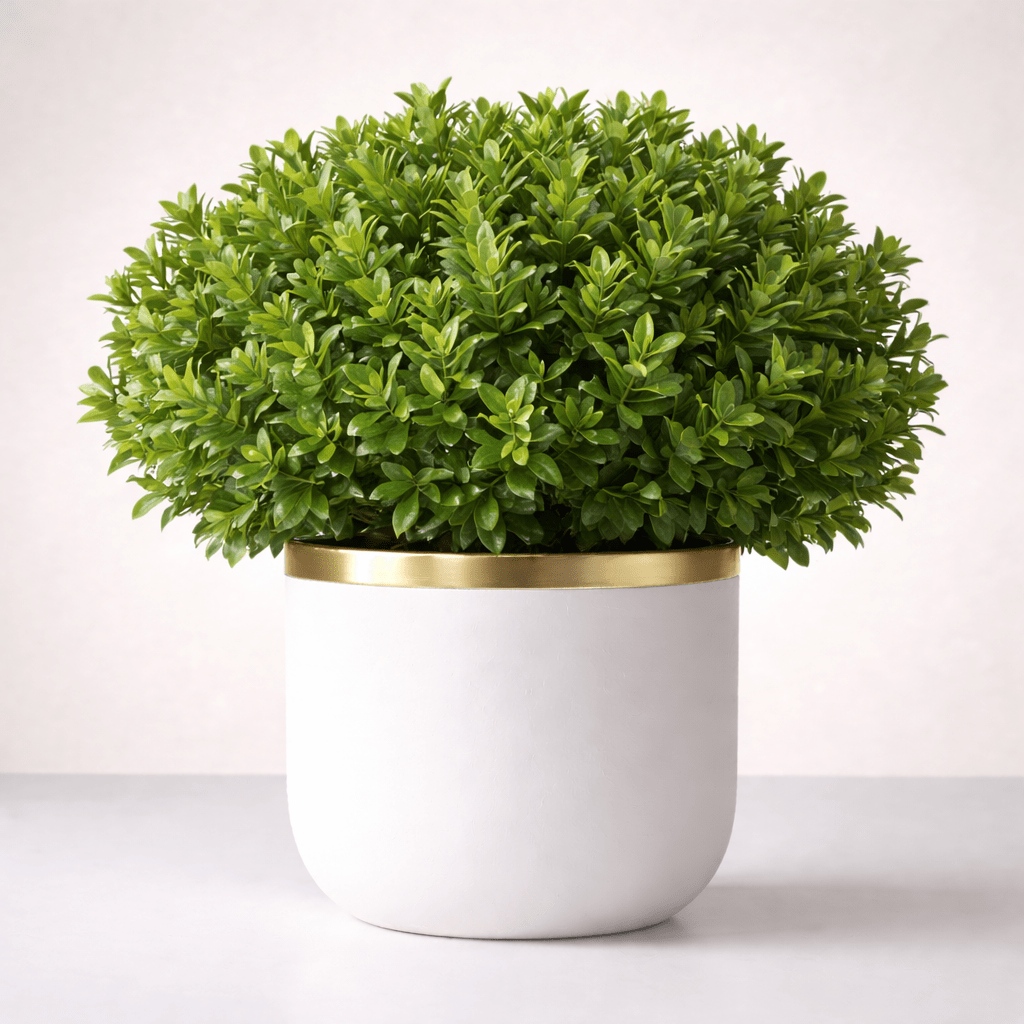
Boxwood Plant
₹199
View & Listen Plant Education
Boxwood Plant - Video Guide
Watch Video
All Details
A classic and versatile evergreen shrub, renowned for its dense, small-leaved foliage and exceptional tolerance for pruning. It is a cornerstone of formal gardens, used for centuries to create precise hedges, topiaries, parterres, and low borders due to its neat, compact growth habit.
I am a slow to medium-growing, broadleaf evergreen shrub with a naturally rounded or mounded form.
My most distinctive feature is my small, oval, glossy leaves that grow densely on multi-branched stems, creating a fine texture.
My wood is very hard (giving me my name, "boxwood") and my leaves have a distinctive, somewhat pungent smell when crushed.
I produce inconspicuous, pale yellow flowers in spring that are mildly fragrant.
I am native to Europe, Asia, Africa, and Central America, with different species originating from different regions.
I prefer consistently moist, well-drained soil, especially when newly planted. Never let me dry out completely.
Once established, I have moderate drought tolerance, but prolonged dryness will cause stress and leaf bronzing.
I am highly intolerant of "wet feet" or waterlogged soil, which leads to root rot.
Deep, infrequent watering that soaks the root zone is better than frequent light sprinklings.
I grow best in full sun to partial shade.
In hot climates, I benefit from afternoon shade to prevent leaf scorch (bronzing).
I can tolerate fairly deep shade, but my growth will be more open and less dense.
I am a hardy shrub, with most common varieties thriving in USDA zones 5-8. Some varieties are suited to zones 4 or 9.
I prefer moderate temperatures and can struggle in the extreme heat of southern zones without shade and ample water.
Winter winds and sun can cause desiccation (bronzing or browning), so a protected site is beneficial.
I am primarily used for formal hedges, topiary, garden borders, and foundation plantings.
Plant in rich, well-drained, slightly acidic to neutral soil. Amend heavy clay soils.
For a hedge, space plants 1/2 to 2/3 of their mature width apart. Dig a trench, not just individual holes.
Apply a 2-3 inch layer of mulch around my base to retain moisture and keep roots cool, but keep it away from the trunk.
I am a light feeder. Apply a balanced, slow-release granular fertilizer in early spring before new growth begins.
Over-fertilizing, especially with high-nitrogen fertilizers, can cause excessive, weak growth and increase susceptibility to pests and diseases.
A soil test is the best guide for fertilizer needs.
Scientific Name: Buxus spp. (e.g., B. sempervirens [Common Boxwood], B. microphylla [Littleleaf Boxwood])
Common Names: Box, Boxwood
Plant Family: Buxaceae
Plant Type: Broadleaf evergreen shrub
All parts of me are toxic to dogs, cats, and horses. I contain alkaloids that can cause vomiting, diarrhea, seizures, and in rare cases, respiratory failure if ingested in large quantities.
As a dense, outdoor evergreen, I contribute to carbon sequestration, oxygen production, and can help filter particulates from the air. My role is primarily in the landscape ecosystem.
Everyday: from 9:00AM to 7:00PM