

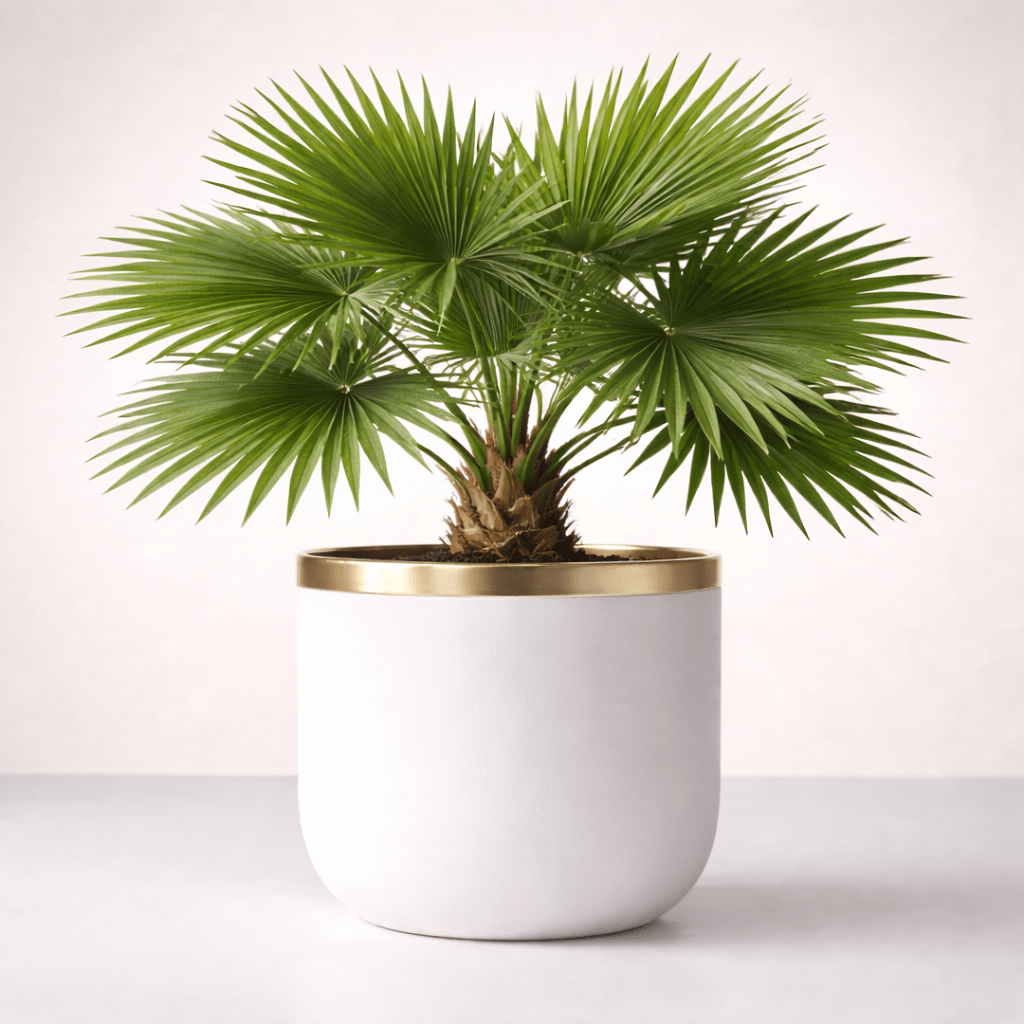
Copernicia Plant
₹199
View & Listen Plant Education
Copernicia Plant - Video Guide
Watch Video
All Details
A majestic and elegant genus of robust, solitary palm trees, renowned for their striking fan-shaped leaves held atop stout, often textured trunks. These are statuesque landscape specimens that evoke tropical and subtropical elegance with a hardy disposition.
I am a slow-growing, solitary (single-trunked) palm known for my resilience and architectural form.
My most distinctive feature is my large, circular, stiff fan leaves (palms) that are often bluish-green or silvery. The leaf segments are deeply split and can be armed with small teeth on the petiole (leaf stem).
Many of my species have a characteristic "hat" of persistent dead leaves (known as a hirsute or petticoat), which cloaks the trunk unless removed.
I am also the source of carnauba wax, a hard, durable wax harvested from the leaves of Copernicia prunifera and used in products like car polish, cosmetics, and food coatings.
I am native to South America, particularly Brazil, Paraguay, and the Caribbean (Cuba, Hispaniola), where I thrive in savannas, dry forests, and coastal regions.
I am highly drought-tolerant once established, having evolved in seasonal climates.
As a young palm, I require regular, deep watering to establish a strong root system. Allow the soil to dry slightly between waterings.
Mature, in-ground palms need infrequent, deep soakings only during extended periods of drought. My roots are deep and seek water.
I am highly susceptible to overwatering and root rot in poor-draining or soggy soils. Perfect drainage is key.
I am a full sun devotee. I require maximum, unfiltered sunlight all day to develop my compact form, sturdy trunk, and characteristic leaf color.
I will not thrive in shade. Insufficient light leads to weak, elongated growth, smaller leaves, and a loss of vigor.
I thrive in warm, tropical to subtropical climates and am best suited to USDA zones 9b-11. Some species are more cold-hardy than others.
My ideal range is 20°C to 35°C. I can tolerate brief dips to around -4°C once mature, especially if dry, but prolonged freezing or wet cold will damage or kill me.
I am highly heat and wind tolerant.
I am a landscape statement palm for avenues, parks, and large gardens. Give me ample space to spread my crown and develop my full stature (height varies by species from 5 to 20+ meters).
Plant in deep, well-draining soil. I am adaptable to sandy, loamy, and even limestone-based soils as long as they drain quickly.
Ensure the planting hole is wide but not too deep—plant so the root flare is at or slightly above ground level.
Remove the protective "boots" of old leaves carefully if a clean trunk is desired, but the persistent petticoat provides habitat and character.
I am a light to moderate feeder. In native, fertile soils, I may need little.
In cultivation, apply a slow-release, palm-specific fertilizer (with micronutrients like manganese and magnesium) 2-3 times during the growing season (spring to summer).
Avoid over-fertilizing, especially with high-nitrogen blends, which can cause nutrient imbalances.
Scientific Name: Copernicia spp. (e.g., C. alba, C. prunifera, C. hospita, C. macroglossa)
Common Names: Carnauba Palm, Wax Palm, Petticoat Palm, Cuban Wax Palm (species-dependent)
Plant Family: Arecaceae (Palm family)
Plant Type: Solitary, evergreen flowering palm tree
The primary risk comes from my stiff, sharply pointed leaf segments and often spiny petioles, which can cause puncture wounds or lacerations. I am not known to be highly toxic, but as with any non-food plant, ingestion of plant material may cause mild gastrointestinal upset in pets.
As a large, outdoor tree, I contribute significantly to carbon sequestration, oxygen production, and providing shade/cooling in the landscape. My role is not measured for indoor air purification.
Hey there!

Madhuram Applewood CityMall