

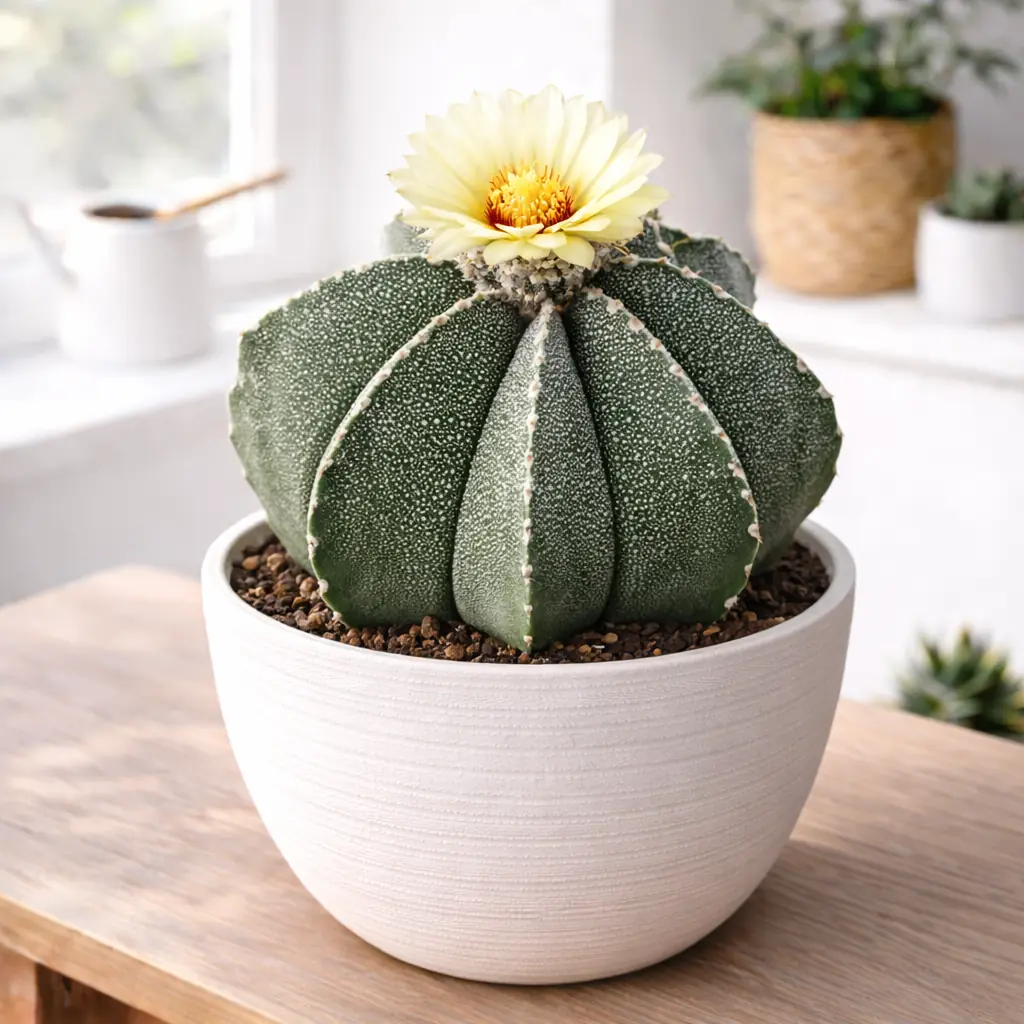
Hatchet Cactus Plant
₹199
View & Listen Plant Education

Hatchet Cactus Plant - Video Guide
Watch Video
All Details
A strikingly geometric and sculptural cactus, named for its distinctive, hatchet-shaped stem segments. This low-growing, clumping plant presents a bold, angular form that stands out in any succulent collection or arid landscape.
I am a low-growing, sprawling, clump-forming cactus that spreads by producing new segmented stems from the base.
My most distinctive feature is my flat, triangular to hatchet-shaped stem segments (cladodes) that are thick, fleshy, and blue-green to gray-green in color. The segments are stacked or arranged in a sprawling, almost chain-like pattern.
I have small, widely spaced areoles along the edges of my segments. From these, I sprout short, fine spines that can be white, gray, or brown. Some forms may appear nearly spineless.
My geometric form is an excellent example of adaptation for water storage and efficient photosynthesis with minimal surface area.
I am native to the arid regions of northern Mexico and the southwestern United States (Texas, Arizona).
I am highly drought-tolerant and adapted to long dry periods. My water needs are very low.
Use the "soak and dry" method stringently. Water deeply only when the soil is completely, thoroughly dry—this may mean every 3-6 weeks during the active growing season (spring-fall).
Overwatering is fatal. My flat segments are prone to swelling, splitting, and rotting if over-hydrated. Perfect drainage is non-negotiable.
In winter, I require absolute drought. Withhold all water from late fall through early spring to prevent rot during cold, damp conditions.
I am a full sun devotee. I require maximum, unfiltered sunlight to maintain my compact, sturdy form and prevent etiolation.
A south-facing exposure is ideal. Insufficient light causes weak, thin, elongated growth that loses the classic hatchet shape.
I can tolerate the most intense desert sun once acclimated.
I thrive in hot, arid climates and am best suited to USDA zones 9a-11.
My ideal growing range is 21°C to 38°C. I am built for extreme heat.
I have good cold tolerance if kept perfectly dry. I can survive brief temperatures down to -7°C, but prolonged freezing or any moisture in cold weather is lethal.
I am an excellent choice for rock gardens, desert landscapes, and containers. My sprawling habit works well as ground cover or spilling over the edge of a pot.
Plant in extremely well-draining, gritty, mineral-based soil. A mix of 50-70% pumice, perlite, or coarse sand with cactus soil is ideal.
Ensure the planting site or container has excellent drainage. My roots are shallow and prone to rot.
Handle with care using thick gloves or tongs. While my spines are not the longest, they are sharp and can detach easily.
I am an exceptionally light feeder. In native soils, I need no fertilizer.
If grown in a pot in depleted soil, a single application of a low-nitrogen, cactus-specific fertilizer at half-strength in early spring is the maximum.
Over-fertilizing causes weak, bloated growth that is more susceptible to pests and rot.
Scientific Name: Grusonia spp. (formerly Opuntia), commonly Grusonia clavata or related species.
Common Names: Club Cholla, Dagger Cholla, Devil's Club (Note: "Hatchet Cactus" is a descriptive common name; botanical ID is key.)
Plant Family: Cactaceae
Plant Type: Perennial, segmented, clumping cactus
My fine, barbed spines (glochids on some species) and sharper central spines pose a severe risk. They can easily detach and embed in skin, mouths, or paws, causing significant pain, irritation, and potential infection. The physical danger far outweighs any toxicity concern, which is low.
My small size and outdoor nature mean I have no notable role in air purification. My value is ecological (habitat) and ornamental in xeriscapes.
Hey there!

Madhuram Applewood CityMall