
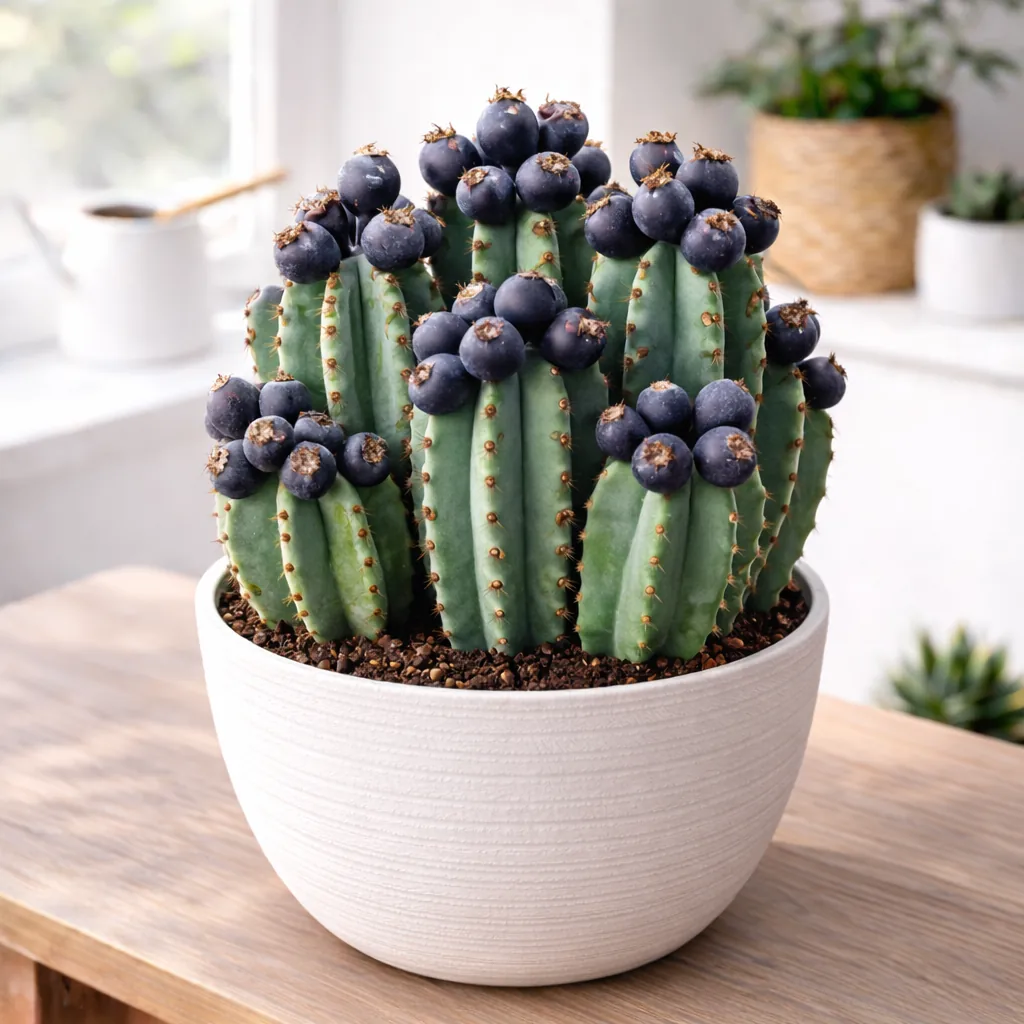
Bilberry Cactus Plant
₹199
View & Listen Plant Education

Bilberry Cactus Plant - Video Guide
Watch Video
All Details
A fascinating and lesser-known epiphytic cactus, celebrated for its unique, three-angled (triangular) stems and the edible, bilberry-like fruits it produces. It is a climbing or trailing cactus, often found growing on trees in its natural habitat, and is valued for both its ornamental form and its tasty berries.
I am a climbing or sprawling epiphytic cactus with long, slender, jointed stems.
My most distinctive feature is my three-angled (triangular), green stems that can grow several feet long. The stems have scalloped edges with small areoles that may produce short spines or bristles.
I produce large, nocturnal, white or cream-colored flowers that are highly fragrant, typically opening at night and lasting only until the next morning.
My edible, oval, red or purple fruits resemble bilberries or small pitayas and are sweet and juicy, earning me the name "Bilberry Cactus."
I am native to the tropical and subtropical regions of Central and South America, including the Caribbean.
As an epiphyte, I prefer more frequent watering than desert cacti but still require excellent drainage. Water me when the top inch of potting mix feels dry.
I thrive in consistent moisture during the growing season (spring and summer) but should never sit in waterlogged soil.
Reduce watering significantly in the winter during dormancy, allowing the soil to dry out more thoroughly between waterings.
I appreciate moderate to high humidity (50-60%), mimicking my rainforest canopy home.
I thrive in bright, indirect light or dappled sunlight. Think of the light under a tree canopy.
I can tolerate some direct morning sun but should be protected from harsh, hot afternoon sun, which can scorch my stems.
Too little light will result in weak, elongated, pale green growth and poor flowering/fruiting.
An east-facing window or a shaded south/west window is ideal.
I prefer warm, humid conditions and am best suited to USDA zones 10-11 if grown outdoors.
My ideal range is 18°C to 27°C during the growing season.
I need a cooler, drier rest period in winter with temperatures around 15°C-18°C to encourage blooming. I am not frost-tolerant.
I am an excellent candidate for hanging baskets where my trailing stems can cascade, or I can be trained up a trellis, moss pole, or piece of bark to climb.
Plant me in a very airy, well-draining, epiphytic mix (e.g., orchid bark, perlite, coconut coir, and a little potting soil).
Ensure the container has ample drainage holes. A wooden basket or terracotta pot works well.
My stems are fragile; handle with care when repotting or training.
I am a moderate feeder during active growth. Feed me every 2-4 weeks in spring and summer with a balanced, diluted liquid fertilizer.
Use a fertilizer higher in phosphorus (e.g., 5-10-5) to promote flowering and fruiting.
Do not fertilize in fall and winter.
Scientific Name: Selenicereus (formerly Hylocereus) species, or more specifically, Mediocactus (This common name is not botanically precise. It often refers to Hylocereus species like the Dragon Fruit cactus, or Selenicereus setaceus, which has small, edible fruits).
Common Names: Bilberry Cactus, Strawberry Pear, Pitaya (though this usually refers to Dragon Fruit)
Plant Family: Cactaceae
Plant Type: Epiphytic or lithophytic perennial cactus
I am non-toxic to cats and dogs. My fruit is also edible for humans. However, the small spines or bristles on my stems could cause mild physical irritation.
Like most plants, I contribute to basic air purification through photosynthesis. My value is more ornamental and culinary.
Everyday: from 9:00AM to 7:00PM