

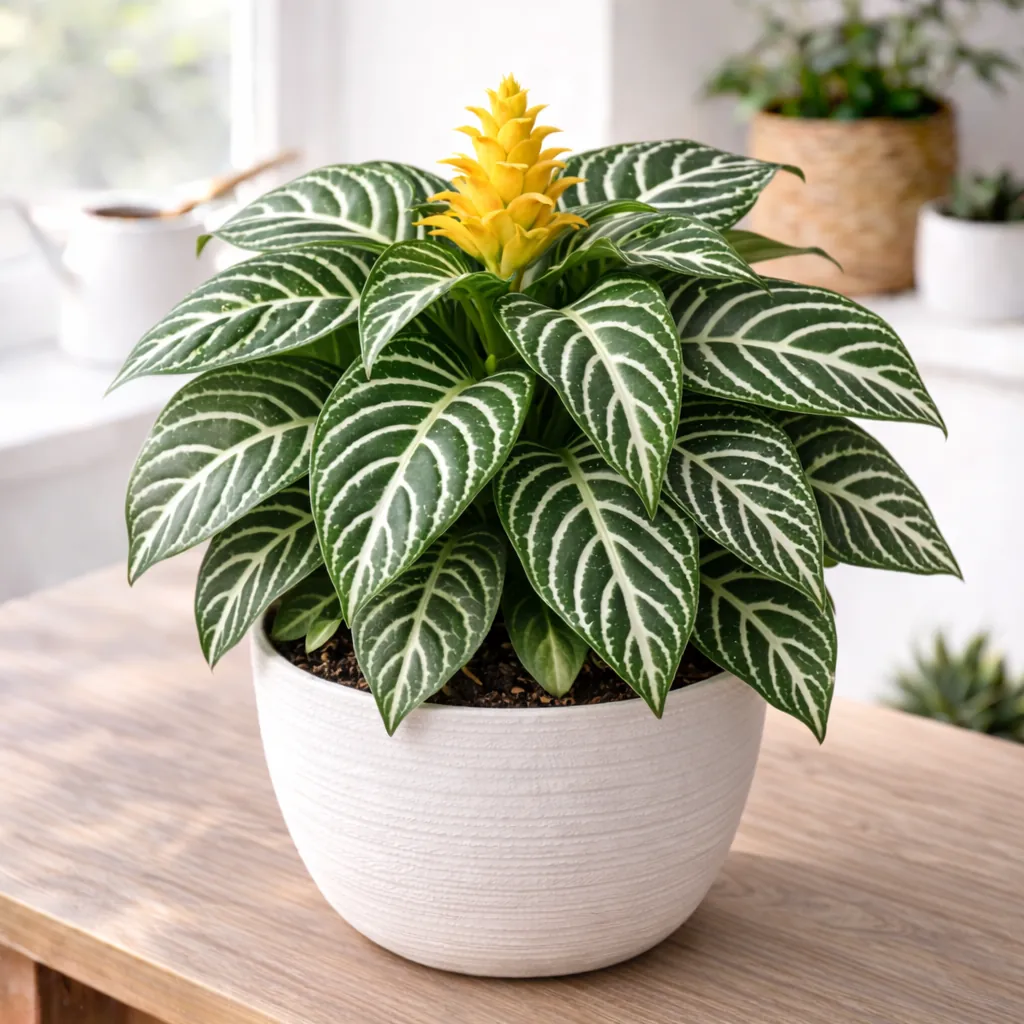
Zebra Plant
₹199
View & Listen Plant Education

Zebra Plant - Video Guide
Watch Video
All Details
A popular and eye-catching houseplant celebrated for its striking, dark green leaves boldly striped with vivid white or yellow veins, resembling a zebra's stripes. It is prized for its dramatic foliage and, with the right care, its bright yellow flower bracts.
I am a tropical evergreen shrub, typically grown as a houseplant for my stunning ornamental leaves.
My most iconic feature is my glossy, dark green, oval leaves with pronounced, painted-looking white or pale yellow veins.
I produce showy, cone-like clusters of bright yellow bracts (modified leaves) from my stem tips when grown in ideal conditions, though I am primarily grown for my foliage.
I have a compact, upright growth habit.
I am native to the tropical rainforests of Brazil.
I prefer consistently moist but not soggy soil. Use well-draining potting mix and water when the top inch of soil feels dry.
I am sensitive to both overwatering (causes root rot) and underwatering (causes leaf drop).
I require high humidity (60-70% is ideal). Low humidity will cause my leaf edges and tips to turn brown and crispy. Use a humidifier, pebble tray, or frequent misting.
Use lukewarm, filtered, or rainwater if possible, as I can be sensitive to chemicals in tap water.
I thrive in bright, indirect light. A few hours of gentle morning sun is beneficial, but I must be protected from harsh afternoon sun, which will scorch my leaves.
Insufficient light will cause my beautiful stripes to fade, and I will become leggy as I stretch for light.
An east or north-facing window is often ideal.
I am a heat-loving tropical plant. Maintain consistent temperatures between 18°C and 24°C.
I am highly sensitive to cold drafts, sudden temperature changes, and temperatures below 15°C.
I am grown almost exclusively as a houseplant in temperate climates (USDA zones 11-12 if outdoors).
I am a perfect tabletop or shelf plant for a bright bathroom or kitchen where humidity tends to be higher.
Use a well-draining, peat-based potting mix.
Ensure the pot has drainage holes. I prefer to be slightly root-bound.
After flowering, I may become leggy. Prune back stem tips to encourage bushier growth.
Feed me every 2 weeks during the spring and summer with a balanced, water-soluble fertilizer diluted to half strength.
Reduce feeding to once a month in fall and stop entirely in winter.
Over-fertilizing will cause salt buildup and leaf tip burn.
Scientific Name: Aphelandra squarrosa
Common Names: Zebra Plant, Saffron Spike Zebra Plant
Plant Family: Acanthaceae
Plant Type: Evergreen flowering shrub
According to the ASPCA, I am non-toxic to cats and dogs, making me a safe choice for pet-friendly homes.
While not the most powerful, my broad leaves contribute to a healthier indoor environment by absorbing carbon dioxide and releasing oxygen. Through transpiration, I also help increase humidity.
Hey there!

Madhuram Applewood CityMall